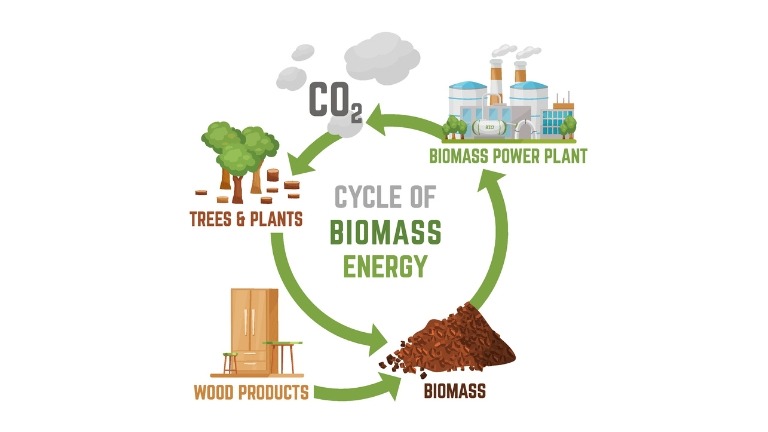









What is a biobased product?
Find out what biobased products are, what their advantages are, and how manufacturers are integrating them to transform their practices.

At CIRAM, we perform carbon 14 analyses in compliance with ISO 16620-2 to accurately determine the proportion of carbonbiobased in plastics, polymers, and biopolymers.
Contact our teams
The ISO 16620-2 standard is an international standard dedicated to determining the content biobased of plastics and polymer materials. It is part of the ISO 16620 series of standards concerning plastics biobased and is today a major reference for manufacturers developing materials from renewable resources.
Its objective is to provide a harmonized method for quantifying the proportion of carbon biobased in polymers, resins, monomers, and carbon-containing additives.
The standard is based on radiocarbon dating (carbon 14), which allows us to distinguish:
It thus allows for:
As the industry transitions toward more sustainable, recyclable, and traceable plastics, this standard provides a reliable scientific framework for characterizing the origin of the carbon used in materials.
To learn more about the principles of carbon 14 measurement applied to plastics biobased, consult our dedicated article: ISO standard 16620-2, for radiocarbon analysis dedicated to plastics.
Request a quote
The ISO 16620-2 standard is used throughout the plastics and polymers value chain to reliably measure the proportion of carbon derived from renewable resources.
It applies in particular to:
The standard provides for different analytical methods based on the measurement of carbon 14. Among them, accelerator mass spectrometry (AMS) is currently the reference method due to its precision and sensitivity. This is the method used by CIRAM to guarantee robust and directly usable results in industrial and regulatory processes.
The analysis makes it possible to determine the percentage of modern carbon (pMC), an indicator directly derived from the measurement of carbon 14. This value is then used to express the carbon content biobased of the material.
The results can be expressed as a percentage of carbon biobased or as a fraction of renewable carbon, ensuring a reliable, traceable, and reproducible measurement. This approach provides a measurement independent of supplier declarations or mass balances, based solely on the isotopic signature of the carbon contained in the material.
Explore the areas of applicationBy choosing CIRAM, you are relying on an independent laboratory specializing in radiocarbon analysis and the characterization of polymer and biobased complex materials.
We bring you :
No. ISO 16620-2 is specifically designed for plastics and polymers, whereas ASTM D6866 applies to a wider range of materials, including solids, liquids, and gases.
Plastics, polymers, resins, bioplastics, additives, and carbon-containing formulations.
The standard provides analytical data used in certification, labeling, and environmental auditing processes, but does not constitute certification in and of itself.
Biodegradable means that a material can decompose naturally. A material biobased is derived from renewable resources, but it is not necessarily biodegradable.
Find out what biobased products are, what their advantages are, and how manufacturers are integrating them to transform their practices.
Milk adulteration is a threat to the quality and conformity of dairy products. What methods can be used to detect these frauds quickly, reliably and ...
Test the naturalness of your flavors and dietary supplements using radiocarbon and stable isotopes. Carbon 14 and stable isotopes allow...
Stable isotope measurements play a key role in the quality control and traceability of industrial materials. But how can you be sure of the reliability of your results? By entrusting your...
Increasing demands for traceability and sustainability make ISCC Plus certification a strategic asset for manufacturers involved in biobased products. Find out more...
EN ISO 21644 is an essential standard for ensuring the compliance and traceability of solid recovered fuels (SRF). But how can you be sure that your materials comply ...